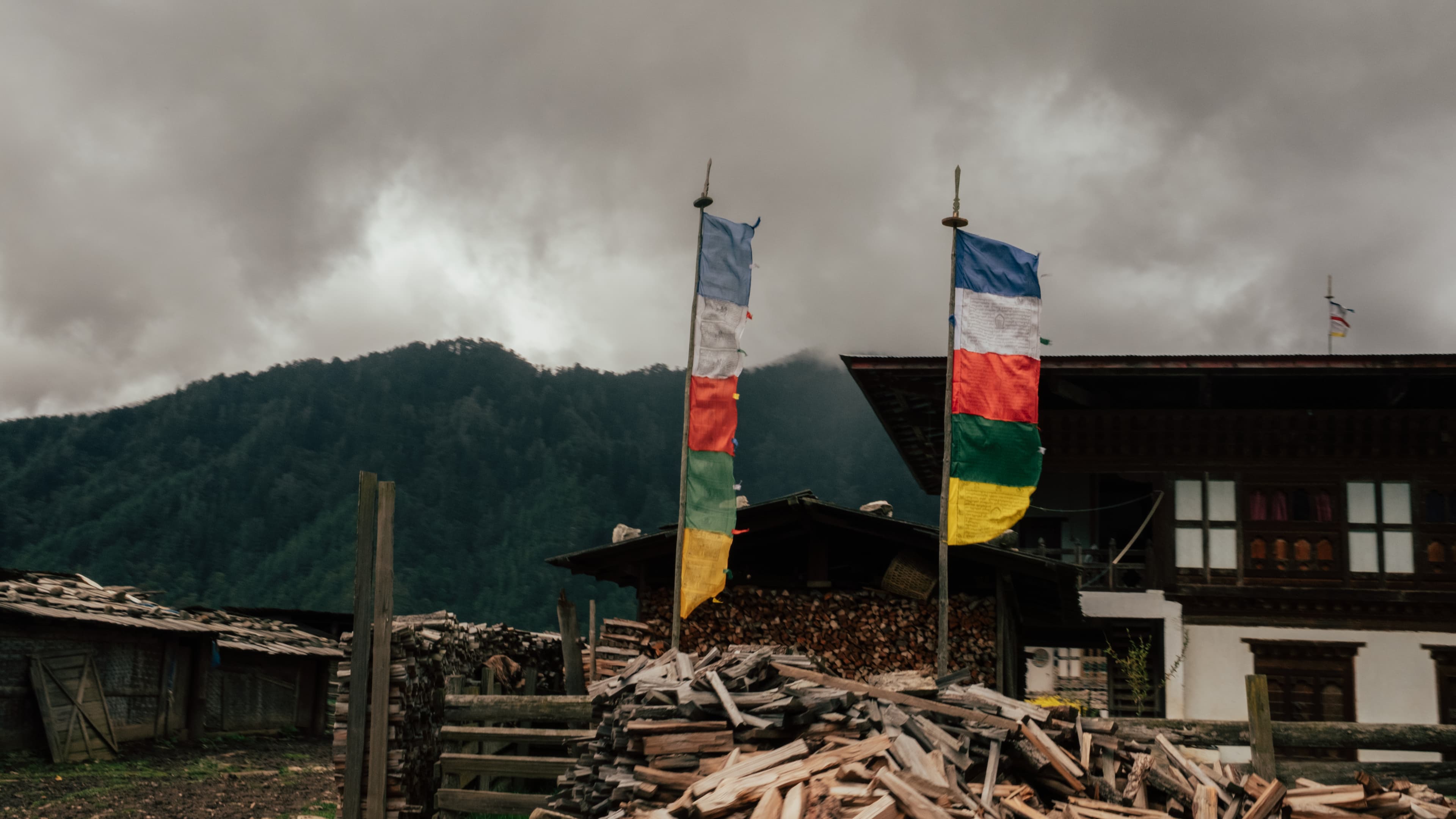
Across Bhutan, houses are more than places to live. They are expressions of identity, craftsmanship, and a deep relationship with the landscape. From the valleys of Punakha to the hills surrounding Thimphu, traditional homes stand out with their painted windows, timber frames, whitewashed walls, and distinctive roofs.
A traditional Bhutanese house can often be recognized before you even reach its doorway. Large wooden windows frame the walls, colorful patterns decorate the upper floors, and carefully carved timber gives each building a character of its own.
What makes these homes particularly fascinating is the way they combine beauty with practicality. Thick walls help protect against the changing mountain climate, while elevated living spaces create separation between the household and the ground below.
The lower levels were traditionally used for animals, storage, or agricultural purposes. The upper floors became the heart of family life, filled with sunlight, wooden furniture, prayer objects, and the everyday sounds of cooking and conversation.
A Bhutanese home is not simply built into the landscape; it becomes part of it.
One of the most recognizable features is the use of painted wooden windows. Their geometric patterns and bright colors provide contrast against the simple white walls. Although decorative, these details also represent the importance Bhutan places on craftsmanship and visual harmony.
In rural areas, traditional homes are often surrounded by fields, fruit trees, and prayer flags. The house becomes part of a larger rhythm of life — connected to farming, seasons, religious practices, and family gatherings.
Punakha is particularly rich in examples of this architectural tradition. Its warmer climate and fertile valley have supported settlements for generations, and many homes continue to reflect the relationship between architecture and agriculture.
But Bhutanese architecture is not frozen in the past. Modern homes increasingly include contemporary materials, heating systems, larger windows, and updated interiors while retaining traditional exterior elements. This balance between old and new is one of the most interesting aspects of Bhutan's changing towns and villages.
Perhaps that is what makes these buildings so memorable. They do not try to dominate their surroundings. Instead, they follow the slopes, valleys, and rhythms of the places where they stand.
Walking through a Bhutanese village, it is easy to notice that no two homes feel exactly the same. A carved window here, a painted beam there, a small courtyard filled with flowers — each detail quietly tells a story about the people who built and lived in the house.
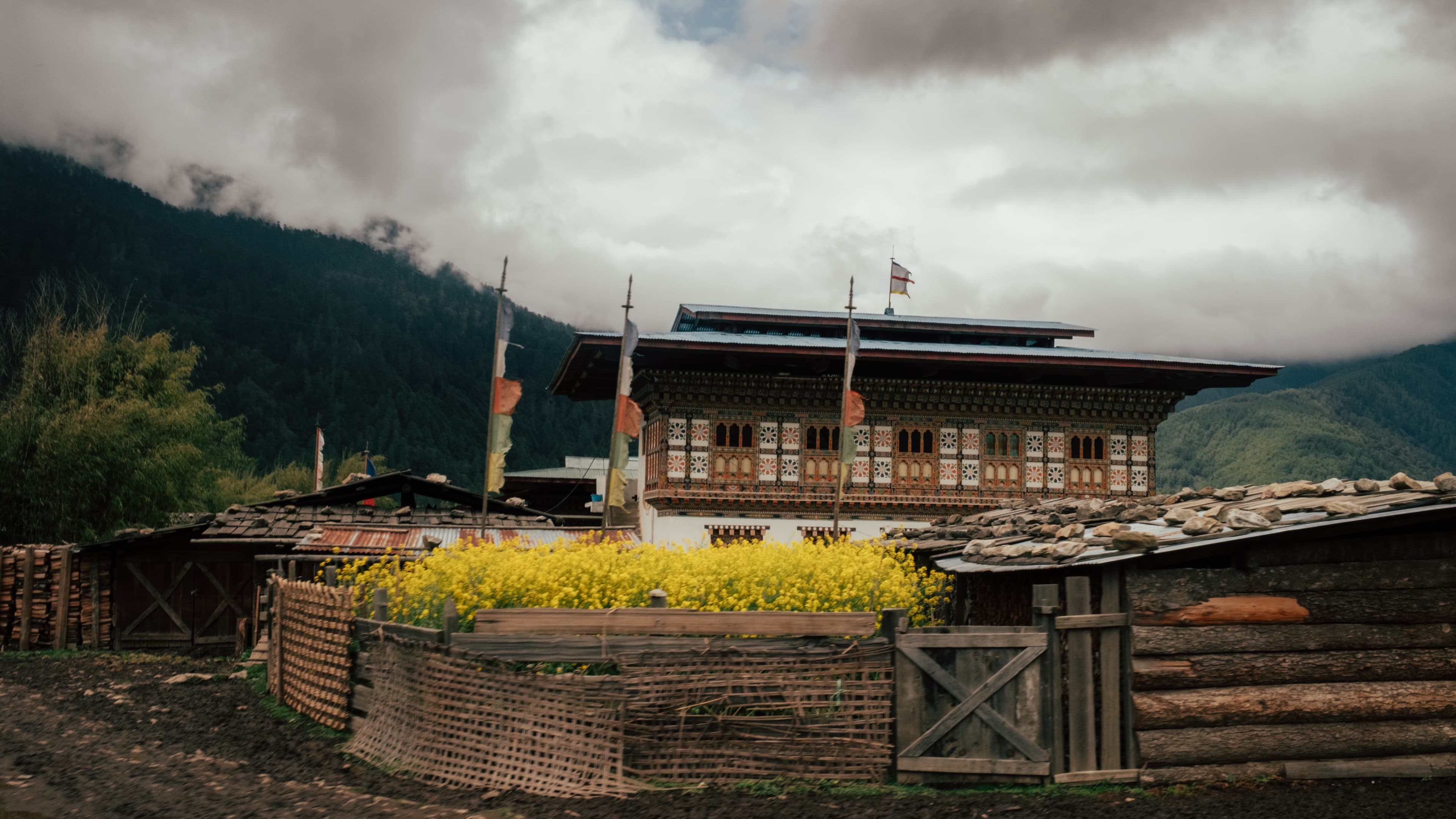
Traditional Bhutanese homes where craftsmanship, family, and landscape meet.